
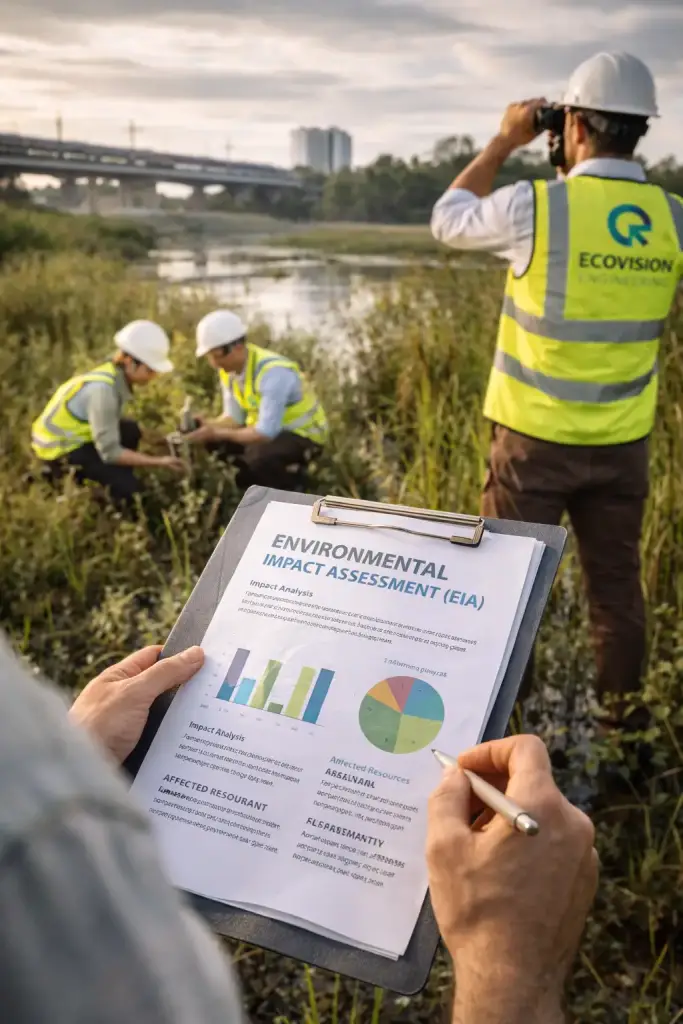
An Environmental Impact Assessment (EIA) evaluates the environmental, social, and health impacts of a project before it begins. It helps identify risks early, reduce negative impacts, and support informed, sustainable decision-making.
RISK & ENVIRONMENTAL IMPACT ASSESSMENT (EIA)
Environmental Impact Assessment
Key Steps & Approach
An Environmental Impact Assessment (EIA) is a structured, forward-looking process used to identify, evaluate, and manage environmental, social, and health impacts of a project before construction begins. It helps decision-makers balance development needs with environmental protection and sustainable outcomes.
At Ecovision Engineering, we deliver efficient, science-based EIAs that support approvals, reduce risk, and keep projects on schedule.
Why an EIA matters
Approvals, timelines, and liability are not improved by guesswork.
Reduces project delays
By anticipating authority concerns and addressing them early,
Protects public health
By evaluating exposure pathways and sensitive receptors.
Strengthens compliance
Aligns with local and international regulatory expectations.
EIA Key Steps (Smart Art style)
A clear process that keeps your project defensible, approvable, and on track.
1) Screening
Confirms whether an EIA is required under the applicable regulatory framework.
2) Scoping
Defines key issues, study boundaries, methods, and required level of detail.
3) Baseline Studies
Establishes existing environmental and socio-economic conditions as the reference baseline.
4) Impact Prediction
Assesses impacts across construction, operation, and closure, including cumulative effects.
5) Mitigation Measures
Designs practical actions to avoid, reduce, or offset impacts and improve outcomes.
6) Reporting (EIAR)
Produces a clear, defensible, compliant report summarizing findings and commitments.
7) Consultation
Engages stakeholders and authorities to collect feedback and resolve concerns early.
8) Monitoring
Tracks performance and confirms mitigation is implemented throughout the project lifecycle.
Outcome: Approvals supported, risks reduced, and a project pathway that holds up under review.
Baseline Studies
We build a defensible understanding of existing site conditions. This baseline becomes the reference point for impact prediction and mitigation design.
- Air, water, and soil quality
- Flora, fauna, and biodiversity
- Human health, land use, and socio-economic context
Result: clearer decisions, fewer surprises, and fewer rounds of authority questions.
Impact Assessment & Prediction
We evaluate how the project may affect the environment and communities across the full lifecycle (construction, operation, closure), including cumulative impacts.
Mitigation & Enhancement Measures
We develop practical, implementable measures that protect outcomes without destroying your budget or schedule.
- Avoid or reduce negative impacts
- Enhance positive environmental and social outcomes
- Define monitoring indicators and responsibilities
The Ecovision Advantage
Ecovision combines technical excellence, regulatory expertise, and practical project experience to deliver EIAs that are:
- Efficient and decision-oriented
- Scientifically robust
- Clear for authorities and stakeholders
- Aligned with project timelines and budgets
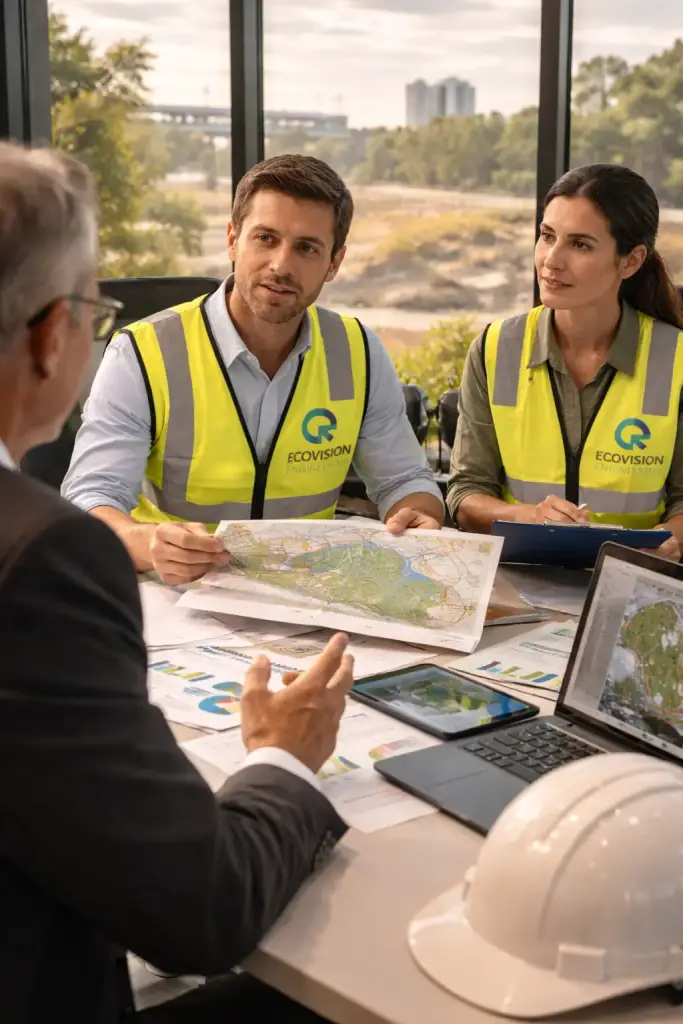
Need an EIA that keeps your project moving?
Share your project type, location, schedule, and authority requirements. We’ll respond with a clear scope, timeline, and approach.